 Exploring
The Jackery Solar Generator 1000 v2 with 200W panel is the best portable solar generator for most campers — a kilowatt-hour of LiFePO4 with a panel big enough to matter. The EcoFlow RIVER 2 Pro + 160W recharges fastest, and the Anker SOLIX C300 + 60W is the ultralight starter kit.
How We Picked
We compared battery capacity and chemistry, AC output, solar input speed with the bundled panel, weight, and owner reports across the three brands that dominate the category. This guide covers camping-scale bundles with panels included — the stations alone are in our portable power station guide, and the big 240V home units are in our home backup solar generator guide. If you already own a station, you may just need a portable panel.
1. Best Overall: Jackery Solar Generator 1000 v2 with 200W Solar Panel
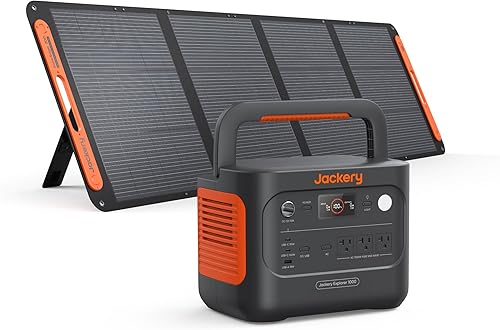
Jackery Solar Generator 1000 v2 with 200W Solar Panel
Jackery
- 1,070Wh LiFePO4 battery with 1,500W AC output
- Bundled 200W panel refills a meaningful fraction per day
- LiFePO4 chemistry rated for thousands of cycles
- One-hour fast charge from the wall before you leave
- The category's defining brand at its most useful size
- 4.3★ from verified owners
Why we picked it: A kilowatt-hour is the size where a solar generator stops being a gadget: it runs a 12V fridge all weekend, keeps a CPAP going for several nights, and charges everything the family carries — and the bundled 200W panel can put back most of a day's fridge usage in decent sun. Jackery invented this category and the 1000 v2 is its formula perfected: LiFePO4 longevity, a one-hour wall charge before departure, and 1,500W of AC for the coffee maker that always comes along anyway.
2. Best Fast-Charging: EF ECOFLOW Solar Generator RIVER 2 Pro with 160W Panel

EF ECOFLOW Solar Generator RIVER 2 Pro with 160W Panel
EcoFlow
- 768Wh LiFePO4 with 800W AC (X-Boost to 1,600W)
- Wall-charges from empty in about 70 minutes
- 160W panel with kickstand case for easy sun-aiming
- Light enough to one-hand from truck to table
- X-Boost runs many high-watt appliances beyond its class
- 4.4★ from 1,300+ owners
Why we picked it: EcoFlow's specialty is speed: the RIVER 2 Pro goes from empty to full on wall power in about 70 minutes, which changes how you use it — top up over lunch at a diner, or in the hour before departure you forgot to plan for. X-Boost lets its 800W inverter run many appliances that would trip other units this size, and the 160W panel's kickstand case makes proper sun-aiming a ten-second job instead of an improvisation with rocks.
3. Best Ultralight Starter: Anker SOLIX C300 Portable Power Station with 60W Solar Panel
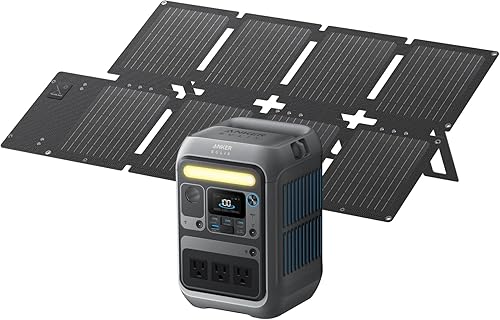
Anker SOLIX C300 Portable Power Station with 60W Solar Panel
Anker
- 288Wh LiFePO4 in a lunchbox-sized package
- 300W AC output covers lights, laptops, and camera gear
- 60W panel keeps the weekend topped up
- Light enough for car camping, kayak trips, and picnics
- Anker's electronics pedigree at its most portable
- 4.5★ from 410+ owners, 500+ bought in the past month
Why we picked it: Not every trip needs a kilowatt-hour. For a couple's weekend of phones, lights, a laptop, and a camera battery rotation, the C300's 288Wh is genuinely enough — and the whole bundle weighs less than most bare 1kWh stations. Anker's consumer-electronics DNA shows in the details: sensible ports, a clear display, and the highest owner rating of the three. It's the honest entry point to solar-generator life, with the same LiFePO4 longevity as the big units.
Comparison Table
| Pick | Bundle | Capacity | Output | Best for |
|---|---|---|---|---|
| Best Overall | Jackery Solar Generator 1000 v2 | 1,070Wh + 200W panel | 1,500W AC | Most campers and weekenders |
| Best Fast-Charging | EcoFlow RIVER 2 Pro + 160W | 768Wh + 160W panel | 800W AC (1,600W boost) | Fast turnarounds and road trips |
| Best Ultralight Starter | Anker SOLIX C300 + 60W | 288Wh + 60W panel | 300W AC | First-timers and light packers |
What to Look For in a Portable Solar Generator
Size the battery to the fridge question. The single biggest divider: will it run a 12V fridge? A quality compressor fridge draws 300-600Wh per day depending on heat. A 288Wh unit can't carry that load overnight; a 768Wh unit manages a weekend with solar help; a 1kWh+ unit does it comfortably. No fridge in the plan? Everything gets smaller, lighter, and cheaper — see our 12V fridge guide for the load side.
Panel wattage is the half people undersize. A 60W panel harvests roughly 200-300Wh across a good day once angles and clouds take their cut; a 200W panel gets you 600-900Wh. Match harvest to consumption: the fridge scenario needs the 200W class to break even, while phones-and-lights life is happy on 60-100W. The bundle's panel-to-battery ratio matters more than either number alone.
LiFePO4 is now the only chemistry to accept. All three picks use it: 3,000+ cycles versus the 500-800 of the older NMC cells, plus far better heat tolerance. On a device you'll cycle every trip for a decade, chemistry is the difference between an heirloom and a landfill entry. Any bundle still selling NMC at this point is clearing old stock.
Wall-charge speed is a real feature, not a spec-sheet vanity. The honest usage pattern is: charge at home, spend it camping, extend it with solar. Fast wall charging (EcoFlow's 70 minutes, Jackery's hour) means the forgotten pre-trip charge stops being a crisis. Solar is the extender and the backstop — the wall is still the workhorse.
Weight compounds. A 1kWh station plus 200W panel is a two-hand, 30-plus-pound proposition — fine for car camping, miserable past the parking lot. Be honest about how far the kit travels from the vehicle. The fastest-growing regret in this category is buying capacity that stays home because it's heavy.
Bottom Line: Which Should You Buy?
For most campers: the Jackery Solar Generator 1000 v2. The right size, the defining brand, and a panel big enough to matter.
For fast turnarounds: the EcoFlow RIVER 2 Pro + 160W. Empty to full in 70 minutes — the road-tripper's charge cycle.
For light packers: the Anker SOLIX C300 + 60W. The honest starter kit — highest-rated here, and the lightest by far.
Ready to buy?
Jump straight to our top picks on Amazon — prices shown at click-through.
Frequently Asked Questions
What is the best portable solar generator in 2026?
The Jackery Solar Generator 1000 v2 is our best overall pick for 2026. The EcoFlow RIVER 2 Pro + 160W and the Anker SOLIX C300 + 60W cover the other cases this guide compares. See the comparison table below for specifications and owner ratings, then choose the one that matches your setup.
What is a portable solar generator?
It's a battery power station bundled with a folding solar panel. The station stores energy and provides AC and USB outputs; the panel recharges it from sunlight. Despite the name there's no engine and nothing generates power except the panel — which is exactly why it's silent, fuel-free, and legal where combustion generators are banned.
Will a solar generator run a refrigerator while camping?
A 12V compressor camping fridge, yes — that's the classic use. Budget 300-600Wh per day for the fridge depending on ambient heat, which means a 1kWh station with a 200W panel sustains it more or less indefinitely in decent sun. A household refrigerator is a different animal; that's home-backup territory.
How long does a solar generator take to charge?
From the wall: about an hour for the Jackery and EcoFlow picks here. From the bundled panel: a 200W panel refills a 1kWh station in roughly a day and a half of good sun; a 60W panel suits smaller stations and slower timelines. Real-world solar always runs 50-70% of the panel's rating once sun angle and clouds have their say.
Are solar generators allowed during fire bans and in national parks?
Generally yes — they're silent and combustion-free, which is why they've become the standard power source where gas generators are restricted or banned. Always check the specific park's rules, but battery power is normally exempt from generator bans and quiet hours.
Can I use a solar generator instead of a gas generator?
For camping-scale loads — fridge, lights, devices, CPAP — yes, and it's quieter, cleaner, and maintenance-free. For sustained high-wattage loads like power tools or air conditioning, a fuel generator still wins on raw endurance; see our inverter generator guide. Many setups pair both: battery for the quiet hours, generator for the heavy lifting.
Related Guides


How We Research
Picks are based on manufacturer specifications, current Amazon availability, and patterns across verified owner reviews. Solar harvest figures assume good direct sun — plan on 50-70% of panel ratings in real conditions.
Safety note: Keep power stations out of direct sun while charging — the panel wants light, the battery wants shade. Never charge a unit that has been dropped hard or shows swelling, and keep stations dry; most are water-resistant at best, and the panel connectors are the weak point.