 Exploring
There are three safe methods: a transfer switch (best, most flexible), a breaker interlock kit (cheapest code-compliant option), and direct appliance cords (no house wiring involved). What you must never do is backfeed through a dryer outlet with a double-male "suicide cord" — it can electrocute utility workers and burn your house down.
The Three Safe Methods
Every legitimate generator hookup does the same thing: it guarantees your generator and the utility grid can never be connected at the same time. A transfer switch does this with a dedicated panel, an interlock kit does it with a sliding metal plate that physically blocks two breakers from being on at once, and appliance cords do it by never touching your house wiring at all. Below are the three pieces of gear those methods need — see our transfer switch guide for the switch itself and our portable generator picks for the machine feeding it.
1. Method 1 Gear: QYZZRS Generator Interlock Kit for Eaton Cutler Hammer Panels

QYZZRS Generator Interlock Kit for Eaton Cutler Hammer Panels
QYZZRS
- Mechanically prevents main and generator breakers being on together
- The lowest-cost code-compliant hookup method
- Gives you access to every circuit in the panel, not just six
- Panel-specific — must match your breaker brand and model
- Takes up one breaker space plus the interlock plate
- 4.3★ from verified owners, 100+ bought in the past month
Why we picked it: An interlock kit is a sliding metal plate that makes it physically impossible to switch on your generator breaker while the main breaker is on. It's the cheapest code-compliant way to connect a generator to your house, and unlike a six-circuit transfer switch it gives you access to every circuit in the panel — you just have to manage the load yourself. The catch is that kits are panel-specific: verify your panel's brand and model number before ordering, because close isn't good enough.
2. Method 2 Gear: Reliance Controls PB30 30-Amp NEMA 3R Power Inlet Box
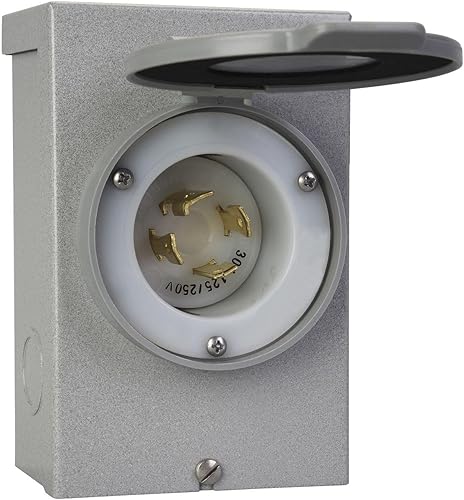
Reliance Controls PB30 30-Amp NEMA 3R Power Inlet Box
Reliance Controls
- 30 amps, sized for generators up to 7,500 running watts
- NEMA 3R weatherproof housing for exterior mounting
- Spring-loaded cover keeps the inlet dry between uses
- Lets you close the door on the generator cord
- Required for both the transfer switch and interlock methods
- 4.8★ from 5,200+ owners, 200+ bought in the past month
Why we picked it: This is the part everyone forgets, and it's the part that makes the whole setup weatherproof. A power inlet box mounts on an exterior wall and gives your generator cord a proper, sealed place to plug in — so you're not running a cable through a cracked window while it rains. It's needed for both the transfer switch method and the interlock method, and with over five thousand owner ratings the Reliance PB30 is the most-vetted piece of hardware in this entire guide.
Looking for the gear itself? See our top generator transfer switches →
3. Method 3 Gear: 30 Amp Generator Cord, 4-Prong 240V, 10 ft, 7,500W

30 Amp Generator Cord, 4-Prong 240V, 10 ft, 7,500W
Generator Cord
- 30 amps at 240V, rated to 7,500 watts
- Heavy 10-gauge conductors resist voltage drop
- Four-prong twist-lock connectors stay seated
- Connects the generator to your power inlet box
- 10-foot length for generators parked close to the house
- 4.8★ from 1,800+ owners
Why we picked it: The cord is the link between the generator outside and the inlet box on the wall, and gauge is the spec that matters. Undersized cable drops voltage over its length, which makes motors run hot and appliances behave strangely — a problem that gets worse the longer the run. Ten-gauge conductors at 30 amps give you margin, and the four-prong twist-lock ends won't shake loose while the generator runs. If your generator parks farther out, buy the same gauge in a longer length rather than chaining cords together.
Comparison Table
| Method | Gear | Coverage | Effort | Best for |
|---|---|---|---|---|
| Method 1 Gear | QYZZRS Generator Interlock Kit | Interlock kit | Whole panel | Cheapest compliant hookup |
| Method 2 Gear | Reliance Controls PB30 Inlet Box | 30A inlet | Exterior mount | Every permanent hookup |
| Method 3 Gear | 30 Amp Generator Cord | 30A / 7,500W | 10 ft | Generator to inlet box |
Which Method Should You Use?
Method 1: Transfer switch. A dedicated sub-panel wired beside your main panel, with switches for six or ten specific circuits. It's the most expensive option and the most foolproof — labeled switches, built-in watt meters, and no chance of overloading the generator by accident. This is the right answer for most homes and the only one we'd recommend if anyone other than you might operate it. See our transfer switch picks.
Method 2: Breaker interlock kit. A metal plate on your existing panel that makes it mechanically impossible to have the main breaker and the generator breaker on simultaneously. It costs a fraction of a transfer switch and gives you the whole panel to work with. The trade-off is discipline: nothing stops you from switching on the electric range and stalling the generator, so you have to manage load yourself. Kits are panel-specific — match brand and model exactly.
Method 3: Direct appliance cords. Run heavy-duty extension cords from the generator straight to the fridge, a lamp, a space heater. It requires no installation, no permit, and no electrician. It also can't power anything hardwired — furnace, well pump, ceiling lights — and means running cords through a door or window. Fine as a stopgap; miserable as a plan.
Can you connect a generator to your house without a transfer switch? Legally, yes — with an approved breaker interlock kit, which is the code-compliant alternative and what most people actually mean by the question. What you cannot safely do is backfeed through a dryer or range outlet using a double-male cord. Those "suicide cords" energize the exposed prongs on one end, push power back onto the utility line where it can electrocute a lineman working to restore your service, and bypass every overcurrent protection in your panel. People die from this every year. There is no version of it that is acceptable.
Sizing and load management. Whatever method you choose, add up the running watts of everything you intend to power and check the startup surge of the largest motor. A furnace blower, a well pump, and a refrigerator compressor all spike hard at startup, and starting them one at a time rather than all at once is the difference between a generator that copes and one that trips. For silent, automatic coverage without any of this, a whole home battery backup system handles the switching itself.
Bottom Line: Which Should You Buy?
For the cheapest compliant hookup: the QYZZRS Generator Interlock Kit. A mechanical interlock plate and one breaker, and the whole panel is available.
For every permanent install: the Reliance Controls PB30 Inlet Box. The weatherproof entry point both compliant methods require.
For the generator-to-house link: the 30 Amp Generator Cord. Heavy 10-gauge copper and twist-lock ends that stay put.
Ready to buy?
Jump straight to our top picks on Amazon — prices shown at click-through.
Frequently Asked Questions
How do I connect a generator to my house?
Through one of three safe methods: a transfer switch (a dedicated sub-panel that isolates selected circuits), a breaker interlock kit (a plate that prevents the main and generator breakers being on together), or direct extension cords to individual appliances. The first two require a licensed electrician and usually a permit; the third requires nothing but limits you to plug-in devices.
Can I connect a generator to my house without a transfer switch?
Yes — with an approved breaker interlock kit, which is fully code-compliant and considerably cheaper. What is never acceptable is backfeeding through a dryer or range outlet with a double-male cord. That energizes exposed prongs, bypasses your panel's protection, and can send power back onto the utility line and kill a lineman restoring your service.
What is a suicide cord and why is it dangerous?
It's a cord with male plugs on both ends, used to backfeed power from a generator into a wall outlet. The moment one end is plugged into the generator, the other end's prongs are live and exposed. It also bypasses circuit protection and can push voltage back through your utility transformer at lethal levels, endangering anyone working on the line. It is illegal and it kills people. Use an interlock kit or a transfer switch instead.
Do I need an electrician to hook up a generator?
For a transfer switch or interlock kit, yes — both involve working inside a live service panel, and most jurisdictions require a permit and inspection. Running extension cords from a generator directly to appliances needs no electrician, since it never touches your house wiring.
How far from the house should a generator be?
At least 20 feet, with the exhaust pointed away from doors, windows, and vents. Carbon monoxide from a portable generator can reach lethal concentrations in an attached garage or near an open window within minutes — never run one indoors, in a garage, or under a carport, even with the door open. Install a working CO alarm on every level of the house before you need it.
Related Guides


How We Research
Guidance reflects National Electrical Code requirements for generator connections and manufacturer specifications for the gear shown. Local codes vary — confirm requirements with your jurisdiction and a licensed electrician before starting any panel work.
Safety note: Never backfeed a generator through an outlet using a double-male cord — it can electrocute utility workers and start a house fire. Run generators at least 20 feet from the house with exhaust directed away from openings, never indoors or in a garage, and fit carbon monoxide alarms on every level.