 Exploring
The ALORAIR Sentinel HD55 is the best crawl space dehumidifier for most homes — 113 pints a day, auto defrost, and built for the low-temperature conditions that stop ordinary units. The AEOCKY 50-Pint is the value pick for a basement, and the ALORAIR 120-Pint with pump adds a condensate pump and app control for spaces with nowhere to drain.
How We Picked
We compared moisture removal in pints per day, low-temperature operation and auto defrost (the spec that separates true crawl space dehumidifiers from repurposed room units), drainage method, coverage area, and durability reports from owners who've run them year-round. Humidity control pairs with the rest of your moisture strategy — see our sump pump guide for the water that pools and our evaporative cooler picks for the opposite problem in dry climates.
1. Best Overall: ALORAIR Sentinel HD55 113-Pint Crawl Space Dehumidifier
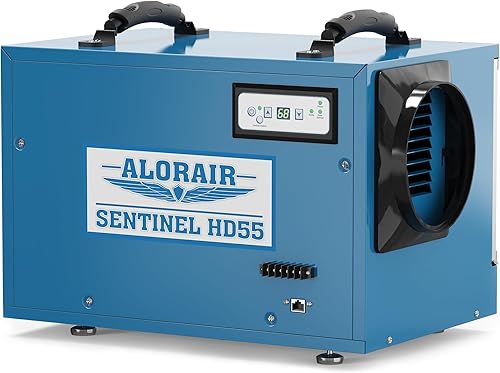
ALORAIR Sentinel HD55 113-Pint Crawl Space Dehumidifier
ALORAIR
- 113 pints per day of moisture removal
- Auto defrost keeps it working in cold crawl spaces
- Built for continuous unattended operation
- Compact low-profile chassis fits tight crawl spaces
- Continuous gravity drain — no bucket to empty
- 4.3★ from 1,100+ owners, 500+ bought in the past month
Why we picked it: Ordinary room dehumidifiers fail in crawl spaces for one reason: the coils frost over below about 65°F and the unit quietly stops removing water. The Sentinel HD55 has auto defrost, which is what lets it keep working through a cold season underneath a house — and it's designed to run unattended for years rather than sit in a bedroom corner. It has by far the deepest owner-review record in the category, and at 113 pints a day it has the capacity to dry a genuinely wet space rather than just holding the line.
2. Best Value: AEOCKY 50 Pint/Day Compressor Dehumidifier, 3,500 sq ft

AEOCKY 50 Pint/Day Compressor Dehumidifier, 3,500 sq ft
AEOCKY
- 50 pints per day across up to 3,500 sq ft
- Continuous drain hose included
- Humidity control holds a set point automatically
- Portable — move it between basement, laundry, and workshop
- Far cheaper than dedicated crawl space units
- 4.4★ from 1,000+ owners, 4,000+ bought in the past month
Why we picked it: Not every damp space is a crawl space. For a basement, a workshop, or a laundry room that stays above 60°F, a good compressor dehumidifier does the same job for a fraction of the cost — and this one has been bought thousands of times a month, which is a strong signal that it survives the first season. Set the humidistat to 50%, run the drain hose to a floor drain, and forget about it. It won't handle a cold crawl space, but that's not what it's for.
3. Best with Pump: ALORAIR Smart Wi-Fi 120-Pint Crawlspace Dehumidifier with Pump

ALORAIR Smart Wi-Fi 120-Pint Crawlspace Dehumidifier with Pump
ALORAIR
- 120 pints per day, Energy Star certified
- Built-in condensate pump lifts water up and out
- WiFi app control and remote humidity monitoring
- Solves crawl spaces with no gravity drain available
- Set a target humidity and check it from your phone
- 4.1★ from 210+ owners, 100+ bought in the past month
Why we picked it: Gravity drainage assumes there's somewhere lower for the water to go, and in plenty of crawl spaces there isn't. A built-in condensate pump pushes water uphill and out through a small line, which turns an impossible install into a straightforward one. The WiFi control earns its keep here too — a crawl space is exactly the sort of place you'd rather check from your phone than crawl into on a January morning to find the unit iced up.
Comparison Table
| Pick | Dehumidifier | Capacity | Key feature | Best for |
|---|---|---|---|---|
| Best Overall | ALORAIR Sentinel HD55 | 113 pints/day | Auto defrost | Crawl spaces year-round |
| Best Value | AEOCKY 50-Pint | 50 pints/day | 3,500 sq ft | Basements and utility rooms |
| Best with Pump | ALORAIR 120-Pint with Pump | 120 pints/day | Condensate pump | Spaces with no floor drain |
What to Look For in a Crawl Space Dehumidifier
Auto defrost is non-negotiable for a crawl space. Below roughly 65°F, a dehumidifier's coils accumulate frost and moisture removal falls off a cliff. Units built for crawl spaces include an auto defrost cycle that clears the coil and keeps working down into the 30s. A standard room dehumidifier will appear to run all winter while removing almost nothing.
Pints per day, and what the rating assumes. Capacity ratings are measured at specific temperature and humidity conditions, and real-world removal in a cold crawl space is always lower than the box says. Size up rather than down: an oversized unit cycles off and coasts, while an undersized one runs continuously and never reaches the target.
Drainage: gravity vs. condensate pump. Gravity drainage is simpler and has nothing to fail, but it needs a drain lower than the unit. If your crawl space has no low point — or the only drain is above the unit — a built-in condensate pump is the difference between a working install and a bucket you have to empty by crawling in.
Crawl space vs. basement vs. whole house. These are three different products. Crawl space units are low-profile, defrost-capable, and built to run unattended in filthy conditions. Basement units are portable, cheaper, and assume moderate temperatures. Whole house dehumidifiers tie into ductwork and are an HVAC install. Buying across categories is the most common and most expensive mistake here.
Encapsulation changes the math. A vapor barrier over the crawl space floor stops ground moisture at the source and dramatically reduces how hard the dehumidifier has to work. If you're doing both, encapsulate first and then size the dehumidifier — you'll often need a smaller unit than you expected, and it will run far less.
Bottom Line: Which Should You Buy?
For a crawl space: the ALORAIR Sentinel HD55. Auto defrost and 113 pints a day, with the longest track record here.
For a basement: the AEOCKY 50-Pint. Fifty pints a day and set-and-forget humidity control at a fair price.
For spaces with no drain: the ALORAIR 120-Pint with Pump. The condensate pump and app control make an awkward install easy.
Ready to buy?
Jump straight to our top picks on Amazon — prices shown at click-through.
Frequently Asked Questions
What is the best crawl space dehumidifier in 2026?
The ALORAIR Sentinel HD55 is our best overall pick for 2026. The AEOCKY 50-Pint and the ALORAIR 120-Pint with Pump cover the other cases this guide compares. See the comparison table below for specifications and owner ratings, then choose the one that matches your setup.
What humidity should a crawl space be kept at?
Aim for 50-55% relative humidity. Below 60% mold cannot establish itself, and staying near 50% gives you margin during humid weather. Going much below 45% wastes energy without additional benefit and can dry out wood framing more than you want.
Do I need a special dehumidifier for a crawl space?
In most climates, yes. Crawl spaces run colder than living areas, and a standard dehumidifier's coils frost over below about 65°F — it keeps running but stops removing meaningful moisture. Crawl space units include auto defrost and are built for the low-clearance, unattended, dusty conditions down there.
What size dehumidifier do I need for a crawl space?
Roughly 70 pints per day for a moderately damp 1,500 sq ft crawl space, and 100+ pints for larger or wetter spaces. If you've installed a vapor barrier you can size down noticeably. When in doubt, go larger — an oversized unit simply cycles off, while an undersized one runs constantly and never gets there.
Can a crawl space dehumidifier run on solar power?
It can, but budget carefully. These units draw 300-700W while running and cycle frequently in humid weather, which adds up to a substantial daily load. You'd want a well-sized array and a serious battery bank — see our solar battery bank guide. Many off-grid owners run the dehumidifier only during daylight hours when the array is producing.
Is a dehumidifier or a vapor barrier better for a crawl space?
They solve different halves of the problem, and the best result comes from doing both. A vapor barrier blocks moisture rising from the soil — the largest source — while a dehumidifier removes what enters through vents, air leaks, and the air itself. If you can only do one first, install the vapor barrier; it reduces how much dehumidifier you need.
Related Guides


How We Research
Picks are based on manufacturer specifications, current Amazon availability, and patterns across verified owner reviews. Pint-per-day ratings are measured at manufacturer test conditions and will be lower in cold crawl spaces — confirm current specifications before buying.
Safety note: Crawl spaces can contain asbestos, mold, rodent waste, and standing water near live wiring. Wear a respirator and gloves, confirm power is off before working near any electrical, and never enter a crawl space with standing water until the circuits serving it are switched off at the panel.